
Doors that won't open or close
We start with the basics that stop movement: power, limits, force settings, safety sensors, and mechanical binding. Then we verify the door is balanced so the opener isn't fighting a heavy door.
Serving Oxnard, California & surrounding areas
Mon–Fri 8am–6pm · Sat 9am–2pm
When your door won't open, won't close, or sounds unsafe, we diagnose the cause fast and make the repair with clean, code-minded workmanship.
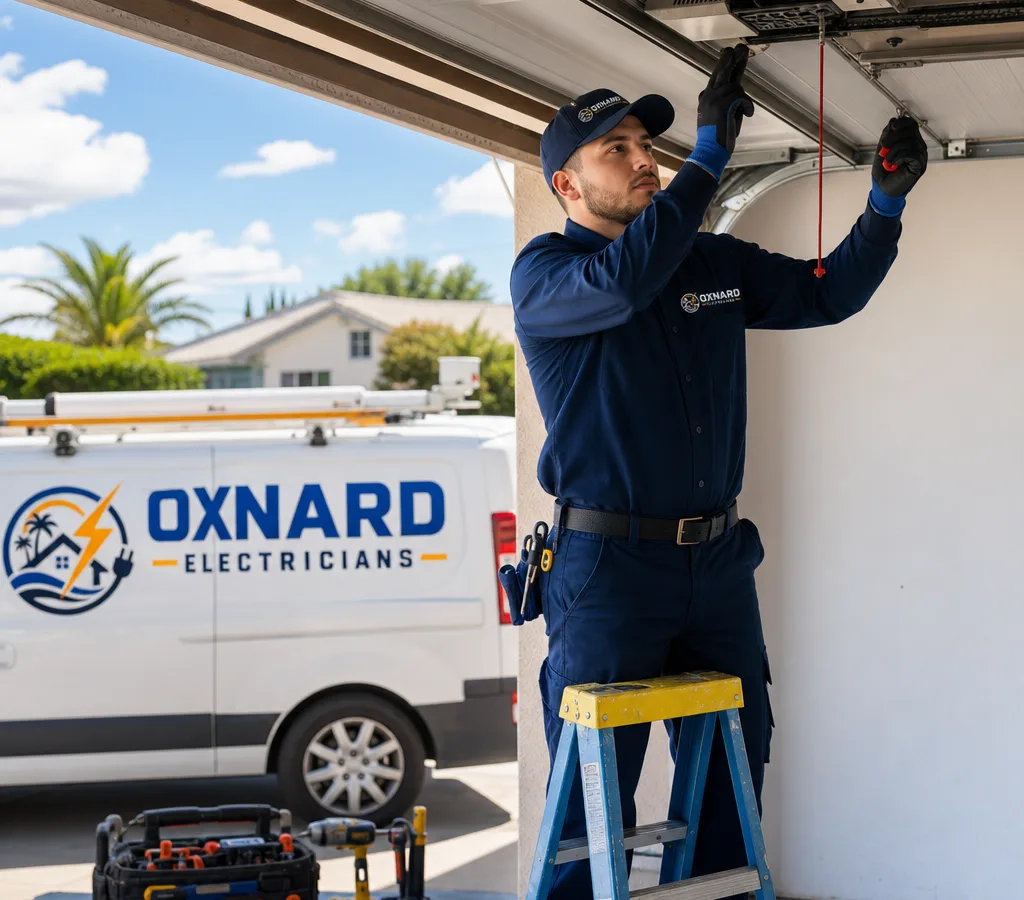
If you're searching for oxnard garage door repair, it usually means the door is interrupting your day: a door that won't lift, a motor that hums but doesn't move, a door that reverses halfway down, or rollers that jump the track. Our job is to find the real failure point, correct it safely, and leave you with a door that runs smooth and predictable.
Garage doors are heavy systems under tension. A typical residential torsion spring setup stores enough energy to cause serious injury if it is handled incorrectly. We focus on controlled diagnostics, proper parts, and verified safety checks—auto-reverse and photo-eyes—before we consider the work complete.
Oxnard has a mix of homes and garages, from newer builds where the opener and sensors are the usual culprits to older door systems where wear in rollers, hinges, and spring hardware can compound into noisy operation and track issues. Coastal air can also speed up corrosion on exposed hardware, which is why we pay attention to bearings, cables, fasteners, and mounting points during the service visit.
Oxnard Electricians is a local team in Oxnard, CA that handles garage door repair with an electrical safety mindset: clean connections, protected wiring, and a clear explanation of what failed and what we changed.
We start with the basics that stop movement: power, limits, force settings, safety sensors, and mechanical binding. Then we verify the door is balanced so the opener isn't fighting a heavy door.
Grinding and rattling often trace back to worn rollers, loose hinges, misaligned track, or a dry bearing surface. We identify the noisy component and correct the cause, not just the sound.
An off-track door can fold panels, damage rollers, and create a pinch hazard. We reset the door, square and secure track, and check clearances so the door runs centered.
If the opener stops, reverses, or the lights flash errors, we inspect photo-eyes, wiring, wall control, and travel settings. We also confirm the opener is matched to the door weight and condition.
Spring and cable problems can present as a door that feels unusually heavy, slams shut, or won't stay at mid-travel. We check the full lift system and replace worn components as needed.
Bottom seal and jamb weatherstripping help keep wind-driven dust and moisture out of the garage. We replace worn seals and adjust closure so the door meets the floor evenly.
A good garage door repair starts with isolating whether the problem is mechanical, electrical, or both. We inspect the door's balance, track condition, roller wear, hinge play, and the lift system—springs, drums, and cables. On the electrical side, we check the opener power feed, wiring connections, wall control, and the photo-eye safety circuit.
In many homes near the coast, we see corrosion on fasteners, cable ends, and bearing surfaces that slowly throws the door out of alignment. That can show up as a door that drifts to one side, rubs the track, or pops and bangs at the top of travel. We address the root cause and then test the system through multiple open-close cycles.
If you're also dealing with breaker trips, a dead outlet near the opener, or flickering lights in the garage, it helps to solve that at the same time. When it's appropriate, our customers ask us to handle the electrical side under our electrician in Oxnard CA service so everything works together safely.
You'll get a clear scope of what failed, what we recommend replacing now versus later, and what maintenance steps actually matter, like keeping photo-eyes clean and making sure the track fasteners stay tight.
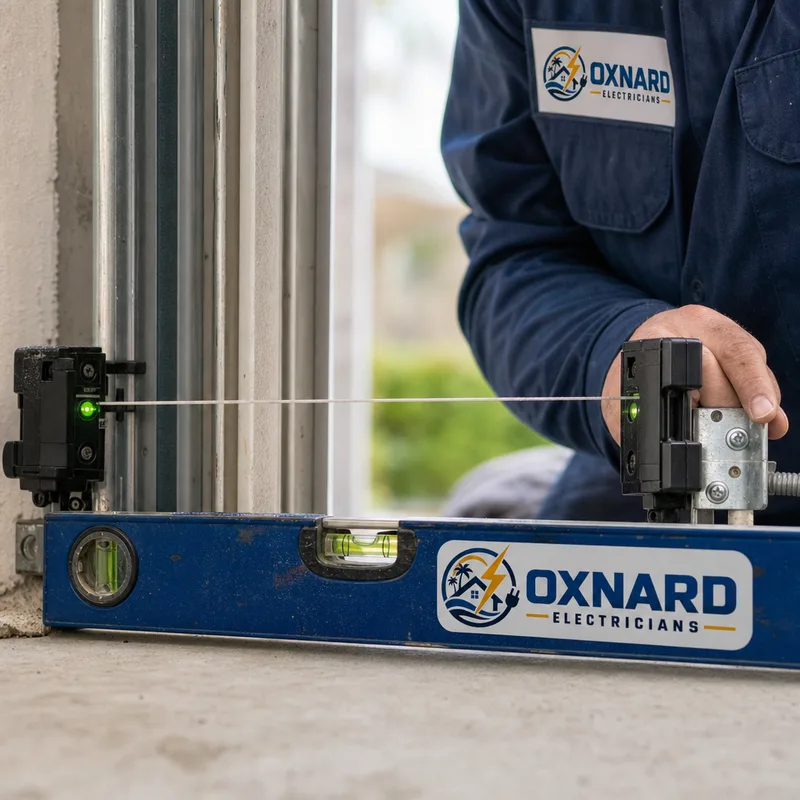
We confirm what the door is doing—stuck, reversing, off-track, or noisy—and inspect for immediate hazards like frayed cables, loose brackets, or a binding track.
We check door balance, roller condition, hinge wear, track alignment, and mounting points. If springs are involved, we evaluate the full lift system so the door isn't left uneven or unsafe.
We test photo-eyes, wall controls, remotes, travel limits, and force settings. When needed, we inspect power and wiring connections to rule out electrical faults.
We complete the approved repair, adjust alignment and settings, and secure hardware to manufacturer-appropriate torque and placement.
We cycle the door repeatedly, confirm smooth travel, and re-check safety functions. You get a straightforward explanation of what we fixed and what to watch for next.
Oxnard garage door repair typically ranges from about $150 to $450 for common adjustments or component replacements, while spring or cable work often lands around $250 to $700+, depending on door size, spring type, and hardware condition. Opener troubleshooting and safety-sensor repairs are often on the lower end when the motor and logic board are healthy.
Your final price depends on what failed—spring, rollers, track, or opener—whether parts are standard or specialty, the door's weight and configuration, and any damage from running off-track. The exact cost is confirmed after an on-site inspection and a clear written scope before work starts.
“Our door kept reversing and the opener lights were flashing. They found the sensor alignment issue quickly, fixed the mounting so it wouldn't drift again, and checked the door balance before leaving.”
“The door jumped the track and got stuck half open. They reset it safely, tightened the track, replaced a couple rollers, and now it runs quieter than it has in years.”
No, you should stop using the door and keep it closed if possible because a broken spring can make the door unexpectedly heavy and strain the opener. A door with a failed torsion or extension spring can slam shut or lift unevenly, and continuing to run it can damage the opener, cables, or track.
An off-track door is usually caused by an impact, a worn roller, a loose track bracket, or misalignment that worsens over time. Once a roller leaves the track, the door can twist, bind, and damage panels, so the repair should include re-seating the door and correcting the alignment or worn parts that led to the failure.
The most common causes are blocked or misaligned photo-eye safety sensors, incorrect opener force settings, or a door that is binding because of track or roller issues. We test the safety circuit first, then check travel limits and door balance so the opener is not reversing because it senses excess resistance.
Yes, in many cases the issue is a failed capacitor, stripped drive gear, worn trolley, incorrect limit settings, or a safety-sensor problem rather than a total opener failure. We diagnose both the opener and the door itself, because a heavy, unbalanced door can make a working opener look broken.
Yes, we repair common residential doors and many light-duty commercial setups where the door and opener are accessible and serviceable. If the door uses specialty high-cycle components or a more complex operator, we'll confirm the exact configuration on site and recommend the safest repair path.
Keep people clear of the opening, avoid pulling on the door, and don't try to force the opener to run repeatedly. If it's safe to do so, disconnect vehicles and valuables from the opening and wait for a technician to secure the door, re-seat it if needed, and identify whether the problem is a cable, track, roller, or spring issue.
Tell us what the door is doing—stuck, reversing, off-track, loud, or dead opener—and we'll schedule a repair visit with a clear scope and safety-focused fixes.